
Decentralised Identity: The Only Way to Protect Your Data?
In a world of increasing AI, the inevitable introduction of robots in future, massive data breaches, and increasing government surveillance, proving you are actually a real human is about to become the most valuable asset you own.
But how you prove it matters.
Will you trust a centralised government database that might be hacked or have data leaked?
Or will we move to a self-sovereign model where you own your data?
Decentralised Identity highlights the risks of the new centralised government digital ID plans in the UK and EU, and crypto protocols like Privado ID and Hedera that are potentially building the solution.
The Problem – Rise in Centralisation & Identity Theft
The question is;
What is the future of your identity?
Who will own this?
For years, we’ve treated our digital identity like we treat our passwords, we give it away to Google, Facebook, governments etc., and we hope they keep it safe or just ignore what they do with this data.
However, identity theft is at an all-time high, as well as fraud in general, with the below image coming from a report by Fraudscape, looking at the first half of 2025 compared to 2024 and earlier. At the same time, governments are pushing for more control under the guise of “convenience.” Can decentralised identity and crypto technology solve the identity crisis?


Figure: Identity fraud cases continue to rise, with 2024 seeing a 5% increase from last year.
The Solution – What is Decentralised Identity?
What exactly is Decentralised Identity?
Often called Self-Sovereign Identity, or SSI, decentralised identity is a shift in power. Because, in the current “Web2” model, your identity is essentially rented. You log in to a platform and all of your data they collect sits on their servers, not yours. However, decentralised Identity flips this model. Instead of your data living in a massive central database that can be leaked, hacked, sold etc. it lives in a digital wallet on your own device.

Figure: A visual comparison of user-controlled data versus centrally stored data.
Decentralised Identity therefore brings the physical privacy you have by holding it yourself, for example your driving license or your passport, into the digital world using blockchain technology. You create your identifier (a DID), and you control the keys. No one can revoke it, and no one can see it without your permission.
Think of the possible use cases:
to protect your data online,
for online authentication, for KYC,
to vote,
when ordering something,
to share your medical records,
for education and employment when applying,
all owned by you, and you decide when you share the data.
The Centralised Threat – UK, EU & US Plans
This matters, because the alternative is already being built, and it looks very different. Many governments across the world are racing to launch Centralised Digital IDs. In the UK, the government has now passed the “Data (Use and Access) Act 2025” that received royal assent in July.

Figure: Announcement detailing the timetable for implementing the Data Use and Access Act 2025.

Figure: Headline on the UK Government website announcing that the Data (Use and Access) Act has officially received Royal Assent.
The compulsory UK Digital ID scheme is no longer just a proposal. It is law and is supposed to be rolled out by 2029. So, what does this Act actually do?
It creates a new statutory framework called “Digital Verification Services”. This BritCard, which is the name of the app on your phone, will likely be used initially to verify your right to work, provide access to government agencies, courts and local authorities, prove your age for things like buying alcohol, and to access other services like driving licenses, childcare, tax records etc.

Figure: Graphic illustrating the BritCard, the UK’s upcoming digital ID designed to streamline identity verification and access to public services.
The government claims this will improve right-to work checks, address illegal immigration, reduce identity theft, and allow easier access to services like government agencies. However, privacy groups like Big Brother Watch have raised massive red flags. They warn that this creates a single point of failure for people’s data. If one government database holds your passport, your tax records, and your health data for example, that becomes the ultimate target for every hacker in the world. We’ve seen this fail before. Look at India’s Aadhaar system, the largest biometric ID system in the world. It has suffered massive data breaches where millions of people’s private details were leaked.

Figure: Aadhaar Data Breach Revealed: Citizens’ Personal Information at Risk
If that happens in the UK, you can’t just “cancel” your face or your fingerprint like you can a credit card. That data is gone forever. That is why nearly 3 million people have signed a petition against rolling out the mandatory digital ID system in the UK, which was debated in parliament on the 8th of December.

Figure: Nearly 3 million signatures push this petition to be formally debated in Parliament on 8 December 2025.
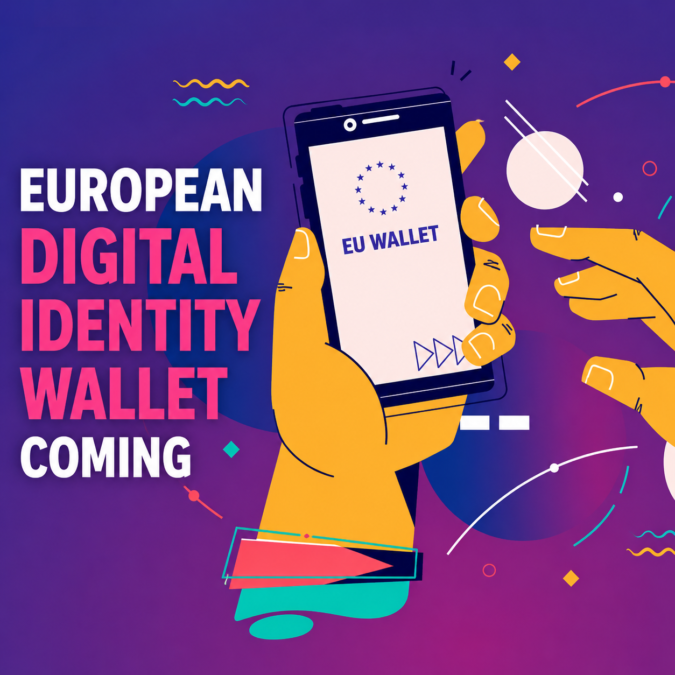
In the EU, it is a similar story with the European Digital Identity Regulation, also known as eIDAS 2.0.


Figure: Headline referencing the launch of the EU Digital Identity Wallet.
EU Digital Identity Wallets are designed to enable secure access to public and private online services, allow users to store and manage digital documents such as educational credentials and transport tickets share verified information with third parties, and digitally sign documents using legally binding electronic signatures.

Figure: EU Digital Identity Wallets for secure, standardised digital ID access.
While these digital ID schemes promise privacy, critics worry about the potential for government overreach. If the government controls the app you use to log in to everything, they could theoretically track every time you enter a bar, visit a website, or access a service. This creates what critics call the “Panopticon” Effect, which is where people change their behaviour to conform to social norms because they believe they are under constant surveillance.
Figure: Title card displaying “The Panopticon Effect,” referencing modern surveillance concerns.
This links heavily to the fears we’ve seen around Central Bank Digital Currencies, or CBDCs. If the government can track what you do, what you buy, what you access etc. and has the ability to limit this, they then have total control, and this is the fear.
How Decentralised Identity Works – The Tech
A decentralised identity model solves this though by using Zero Knowledge Proofs.
Figure: Zero Knowledge Proofs (ZKPs) enable verification of information without revealing the actual data, enhancing privacy and security in digital transactions and cryptography.
If we think about what happens now if someone needs to prove their age, they likely hand someone their driving licence to prove they are over 18 or 21 to buy alcohol for example. But, by doing this they are handing them their full name, their home address,
and their exact date of birth, which they don’t need to know. They just need to know the person is over 18 or 21, but the “technology” of a plastic card reveals it.
However, Decentralised Identity fixes this. With a Zero Knowledge Proof a digital wallet can prove a fact without revealing the data. If someone needs to prove they are over 18, their wallet doesn’t show the person that is checking this their date of birth. Instead, it runs a calculation and simply sends a cryptographic “Tick” or ‘yes’, that confirms this. Their device therefore knows for a fact the person is over 18, but they never see their full name, their address, or their date of birth.
This is the difference between the old model of “showing your papers”, and “proving a fact” which should be the future of proving identity and data ownership.
The Builders – Who is making this happen?
The technology exists for this. But who is actually building it in the crypto space?
 First, we have Privado ID, which you might know as Polygon ID. They evolved from Polygon Labs in 2024 to become an independent, protocol-agnostic company.
Figure: Privado ID logo representing secure, privacy-focused digital identity solutions for modern authentication and data protection.

Now headquartered in Switzerland, they are building the plumbing for this new system on multiple blockchains, not just one, and they are working with giants like Deutsche Bank and Telefonica.

Figure: Deutsche Bank and Telefónica, leading global financial and telecommunications companies.

They recently created the Billions Network specifically to solve the “Age Verification” problem.
Figure: Billions Network by Privado ID, showcasing a scalable, secure digital identity network for privacy-focused online interactions.
They are rolling out the exact tools discussed in this article, allowing you to prove you are a certain age without handing over your driving license or passport to a website.

Figure: Billions Network by Privado ID promotes secure digital identity: maintain privacy, verify humans and AI, authenticate via phone, and earn continuous rewards.
This is an example of “Reusable KYC” in action because you verify once, store the credential in your wallet, and never share your raw data again. For example, when you sign up to a new crypto exchange you don’t have to upload your passport photo again and go through that long KYC process.
 You simply connect your wallet and prove that you have already passed the required checks, allowing instant access. Importantly, none of your personal data is stored on the exchange’s servers, significantly reducing the risk of future data breaches or misuse.
Hedera, by contrast, is taking a more enterprise-focused approach. Its decentralised identity strategy is built around the W3C Decentralised Identifier (DID) standards, positioning the network as a potential solution for large-scale, regulated use cases.
Figure: Hedera (HBAR) logo representing the decentralised public network and its native cryptocurrency for fast, secure, and scalable digital transactions.
They are not just looking at human identity, but Identity for Things (IoT). Imagine a future where your car has its own decentralised identity on the blockchain. It could “talk” to a charging station or to a robot at a supermarket, verify it has the funds to pay for the electricity, food, or what your purchasing, and execute the transaction automatically before driving back to your house, without you needing to hand over your credit card details to the charging company.
This is not just theory. Just last month, the BEEAH Group in the UAE launched a verified digital identity platform built entirely on Hedera.

Figure: The BEEAH Group in the UAE launches a verified digital identity platform powered by Hedera, enabling secure, decentralised, and privacy-focused identity management.
This is one of the first real-world examples of a major enterprise using decentralised Identity to verify citizens and employees. This is a self-sovereign system where the user holds the keys, not a central government database, with BEEAH creating climate-smart sustainable cities, focusing on five areas of the:
environment,
energy,
technology,
health care,
real estate.

Figure: Beeah is introducing Khalid Bin Sultan City, a sustainable real estate development focused on smart city design, eco-friendly infrastructure, and modern urban living.
 The “World” Elephant in the Room
Linked to this is identity without mentioning World, formerly known as Worldcoin.
Figure: Worldcoin logo representing a global digital currency platform focused on secure, decentralised identity verification and inclusive financial access.
This is the project co-founded by Sam Altman of OpenAI in 2019. Their goal is to solve “Proof of Personhood” proving you are a human and not an AI bot by scanning your iris with a chrome sphere called “The Orb.”
They state that being identified as human will ensure access to things like financial services, concert ticket sales, dating apps, video games etc. as well as being able to connect with other real humans rather than AI bots.

Figure: Worldcoin project, co-founded by Sam Altman in 2019, uses “The Orb” to scan irises and verify “Proof of Personhood,” ensuring users are human, not AI bots.
World claims to be decentralised and privacy-preserving using Zero Knowledge Proofs. But some are sceptical of this because, even if the blockchain is decentralised, the issue is the Orb, a proprietary, centralised piece of hardware which isn’t all open source. You therefore have to trust that the device isn’t secretly storing your biometric data or leaving a “backdoor” open for governments. It is a perfect example of the tension in this space:
We need to prove we are human,
But do we want to hand our data and biometrics to a company to do it?
The Future & The Challenge
Where is this all heading?
The biggest challenge for decentralised identity isn’t the technology. It is the User Experience because, if we are being honest, most people choose convenience over privacy. Logging in with “Sign in with Google” or using Apple FaceID is easy. Managing a self-sovereign identity wallet, backing up your keys, and signing transactions is harder. For decentralised identity to win, it has to be just as easy as the centralised version. However, the catalyst might be AI. Because, the more the AI agents and deepfakes become indistinguishable from reality, we can no longer trust what we see or who we are talking to.
We will need to move towards a Web of Trust, where every email, every video, and every transaction will need a cryptographic signature to prove it is real. If we don’t build a decentralised layer for that, the governments and big tech companies will build a centralised one for us. Once they have that control, it is much harder to reclaim it.
Conclusion
To summarise, the battle for the future of identity is happening right now.
On one side, we have the UK and EU governments pushing for centralised Digital ID wallets that are efficient, but a potential privacy nightmare and a single point of failure.
On the other hand, we have the crypto ethos of Self-Sovereign Identity using Zero Knowledge Proofs to prove who we are without giving away our data.
The technology is being built as we’ve seen, but the question is:
Will we value our privacy enough to adopt it?
Or will most people sleepwalk into a digital surveillance state because it is more convenient?
James also offers 1:1 coaching to those who are genuinely looking to educate themselves in the crypto space.

Self-custody and the security of people’s crypto is key to us at Coin Knowledge as a business focused on education, so, holding your assets securely in a hardware wallet, in cold storage, in something like a Trezor is key.
Figure: Trezor, a leading company providing secure hardware wallets for cryptocurrency storage and management.

The latest top-of-the-range model of Trezor is, the Trezor Safe 5.
Figure: Trezor Safe 5, a next-generation hardware wallet designed for secure cryptocurrency storage and management. Source: Trezor.
The next crucial step is securing your seed phrase. Cryptotag is the leading and best-selling storage device for that.

 Figure: Cryptotag, a company known for its premium titanium backup solutions for securely storing cryptocurrency recovery phrases. Source: Cryptotag.
If you are looking for an easy way to track and stay on top of your crypto investments, you can check out CoinStats, which is the leading cryptocurrency portfolio tracker.
Figure: CoinStats, a comprehensive cryptocurrency portfolio tracker and management platform. Source: CoinStats.

There is also Koinly, which is one of the best automated crypto tax platforms out there, and you can sign up for a free account.
Figure: Koinly, a cryptocurrency tax calculation and portfolio tracking platform.

If you are looking for more personalised support with your crypto taxes, Myna is one of the leading UK crypto accountancy firms that provides expert crypto tax advice, ass well as services such as wealth management, restructuring, and offshoring.
Figure: Myna & Nephos Group, firms specializing in accounting, taxation, and financial services for digital assets and cryptocurrency businesses. Source: Nephos Group.

Crypto Tax Audit is a leading crypto tax company in the United States. If you need help with your crypto tax planning, definitely check them out.
Figure: CryptoTaxAudit, a professional service specializing in cryptocurrency tax compliance and IRS audit defence. Source: CryptoTaxAudit.

Ready to Start Your Crypto Journey with Confidence?
Our upcoming Crypto Foundations course is designed to give you the essential skills to navigate the world of digital assets safely and effectively.
Don’t miss out!
Click Here to join the waitlist to get exclusive updates and be the first to know when we launch.