

AI Has Taken Over Crypto?
The missing liquidity is currently being absorbed by AI data centres. Capital expenditure by the Magnificent Seven is projected to reach $680 billion in 2026 alone. This disparity helps explain why a broad altcoin rally has not materialised, as institutions are prioritising physical data centre infrastructure over digital tokens that are still developing their use cases.
However, this is not necessarily a competition. AI and crypto may ultimately require one another in order to scale effectively.
This article examines whether AI has taken over crypto. It explores the massive spending on AI infrastructure and compares it with capital flows into crypto venture funding. It also considers where AI and crypto intersect, as the future is likely to involve both technologies working together.
Nothing contained in this article constitutes financial advice.
The Capital Vacuum
First, let’s look at the raw data and the scale of the capital involved.

Figure: Magnificent Seven Set to Spend $680 Billion on AI Capex in Historic Tech Investment Push
According to recent forecasts, capital expenditure or capex by the Magnificent Seven is projected to hit about $680 billion in 2026 alone.
This only tracks the massive cloud hyperscalers:
- Amazon
- Microsoft
- Meta
- Google,
Roughly 75% of this spending is directed towards AI infrastructure, including the construction of large-scale data centres and the purchase of custom silicon chips. However, these companies are not the only participants investing in this physical infrastructure.


Figure: OpenAI and Anthropic Invest in New Data Centers to Power AI Growth
Frontier AI laboratories such as OpenAI and Anthropic are increasingly vertically integrating their operations. Anthropic has announced a $50 billion American infrastructure project, while OpenAI is developing a gigawatt-scale campus in Michigan.

Figure: Elon Musk Reveals Plan to Expand Colossus 2 Data Center to 2 Gigawatts for AI Growth
They are following Elon Musk’s xAI in building their own facilities and vertically integrating operations, with the company recently bringing online its Colossus 2 data centre in Memphis, described as the world’s first gigawatt-scale AI training cluster.
This means that the real spending is much higher than Wall Street is estimating.

Figure: Global AI Data Centers Expected to Demand 68GW by 2027
To put this global power requirement into perspective, research suggests that AI could require 68 gigawatts by 2027, roughly equivalent to the output of 68 nuclear power stations.

Figure: Big Tech Issues Over $120 Billion in AI-Focused Debt
Analysts are therefore describing this as an AI capital expenditure supercycle, with hyperscalers raising over $120 billion in debt during 2025 alone to fund this expansion. If we compare this nearly $700 billion investment in AI with what is happening in the crypto sector, the disparity becomes clear.


Figure: 2025 Sees Record $18.9B in Crypto Venture Capital Funding
Crypto venture capital funding in 2025 reached approximately $18.9 billion. This stark disparity helps explain why a broad altcoin rally has not materialised.
During the 2021 crypto bull market, low interest rates meant capital was cheap and flowed widely across risk assets. Crucially, the AI sector was not acting as a significant capital vacuum at that time. As a result, abundant liquidity spread across the entire digital asset space.
Today, the macroeconomic environment is markedly different. Capital is more expensive due to higher interest rates and has therefore become more concentrated. Rather than allocating broadly across the crypto ecosystem, major investors have pivoted towards heavily funding the physical infrastructure underpinning the AI revolution.
Institutions are prioritising physical data centres over digital tokens that are still developing their use cases. As a result, the speculative premium has, at least temporarily, been drained from the broader crypto market.

Figure: Q1 2026 Crypto VC Hits $2 Billion Amid Growing Blockchain Investment
However, crypto venture capital is beginning to show positive signs. In the first quarter of 2026 alone, more than $2 billion was invested. This new capital is not chasing retail-driven hype. Instead, investors are focusing strictly on infrastructure, stablecoins, and real-world assets.
The Convergence
This is not a competition because AI and crypto actually need each other to scale.

Figure: Salim Ismail
Technology strategist Salim Ismail points out a major shift in this landscape.

Figure: Salim Ismail Predicts AI Models Will Become the New Operating System
He argues that AI models will be the new operating system and computing is evolving from static logic to outcome-based assistants. He predicts the rise of the proper personal agent, forecasts an agent-as-a-service economy in the future, and that, in this economy, hybrid teams of humans and machines will charge by the token. But these autonomous AI agents have a fundamental problem. AI agents cannot open traditional bank accounts to transact. Therefore, if an AI agent needs to pay for data, storage, or APIs, it requires a frictionless, borderless payment system. This is where crypto wallets become relevant.

Figure: Introducing Agentic Crypto Wallets for Smarter Asset Management
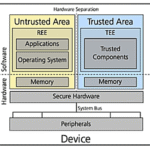
We are now seeing the launch of agentic wallets from companies such as Coinbase, which allow AI agents to spend, earn, and trade autonomously. These wallets operate through non-custodial structures secured within Trusted Execution Environments and utilise the x402 payments protocol for machine-to-machine transactions.
This enables programmable resource access without human intervention. To prevent agents from halting operations due to network fees, these wallets also support gasless trading on layer-2 networks such as Base.
Adoption of this technology is accelerating.

Figure: Ethereum Sees 13,000+ AI Agent Registrations in Just One Day
More than 13,000 AI agents registered on Ethereum in a single day, using the new ERC-8004 standard to establish portable identities. This suggests that AI agents will increasingly transact using crypto infrastructure.
AI also requires crypto for trust and verification. Many analysts predict that only a small number of large technology firms will dominate AI model development, creating significant centralisation risk. Blockchain provides a decentralised alternative to this concentration of power.
As AI generates increasing volumes of digital content, the need for verifiable digital fingerprints becomes more important. Blockchain offers immutable records capable of proving authenticity and origin, effectively acting as a permanent receipt that can help identify deepfakes. In the future, this may become one of the primary ways to distinguish between real human interaction and AI-generated activity.
At the same time, crypto benefits from AI in terms of utility and security. Because blockchain transactions are immutable, early and instant threat detection is critical. Platforms can use AI to identify suspicious transaction patterns, allowing activity to be blocked or frozen immediately, potentially preventing scammers from cashing out. AI can also audit complex smart contracts, scanning for hidden vulnerabilities or potential exploits in the code. If a malicious exploit is detected in real time, the system can prevent the transaction before it is executed.
The Resource Bottleneck
A third factor connecting these industries is physical resource constraint. AI data centres consume substantial electricity, as does crypto mining. Both industries are competing for the same underlying energy resources, with power likely to become the primary constraint and the key to unlocking their full potential.

Figure: The Great Pivot of 2025–2026: Bitcoin Mining Shifts to AI Power
This dynamic is already visible in the mining sector. Bitcoin miners are pivoting towards High Performance Computing, or HPC, and AI data centres, particularly after the 2024 halving reduced block rewards by half. Many are now operating hybrid models but are increasingly shifting capacity towards AI space than Bitcoin mining, where generative AI demands immense computational power and energy.
Because miners already control large electrical capacity and cooling systems, they are well positioned to provide infrastructure services to AI companies, often at attractive margins.

Figure: CoinShares Report Highlights $65B AI Contract Surge Among Miners
In 2025, public Bitcoin miners signed more than $65 billion worth of AI and high-performance computing contracts. These AI contracts can generate roughly three times the revenue per megawatt compared with traditional mining operations, with some estimates suggesting AI workloads may deliver up to 25 times more revenue.

Figure: Revenue Shift: AI Compute Surpasses Bitcoin Mining by 25x
Miners also hold a strategic advantage due to their control of key inputs, having secured more than 14 gigawatts of power capacity.

Figure: Crypto Mining Industry Secures 14 Gigawatts to Fuel Growth
By contrast, building a Tier 3 AI data centre can take several years when accounting for land acquisition, zoning, permitting, and substation development. There are exceptions, such as Elon Musk’s xAI, which accelerated development of the Colossus data centre in approximately 122 days using an existing industrial facility and temporary gas turbines.

Figure: Colossus Supercomputer Completed by xAI in Record 122 Days
This structural advantage explains why Bitcoin miners are well positioned. Many already operate flexible industrial power shells in place, enabling deployment times to be reduced by up to 75 percent. Several facilities are also equipped with advanced liquid immersion cooling systems, which are necessary to keep high-performance AI chips operating efficiently.

Self-custody and the security of people’s crypto is key to us at Coin Knowledge as a business focused on education, so, holding your assets securely in a hardware wallet, in cold storage, in something like a Trezor is key.
Figure: Trezor, a leading company providing secure hardware wallets for cryptocurrency storage and management.

The latest top-of-the-range model of Trezor is, the Trezor Safe 5.
Figure: Trezor Safe 5, a next-generation hardware wallet designed for secure cryptocurrency storage and management. Source: Trezor.
The next crucial step is securing your seed phrase. Cryptotag is the leading and best-selling storage device for that.

Figure: Cryptotag, a company known for its premium titanium backup solutions for securely storing cryptocurrency recovery phrases. Source: Cryptotag.
Even with miners pivoting, large technology firms may eventually face constraints if chip supply and terrestrial energy capacity become bottlenecks.


Figure: Render, Akash, and Aethir: Leading Decentralized GPU Networks
This limitation could support the growth of DePIN, or Decentralised Physical Infrastructure Networks. Projects aggregating distributed GPU power globally may be able to participate in AI revenue generation while democratising access to compute for smaller firms that cannot afford centralised hyperscale clusters.

Figure: PowerBank invests in Orbit AI’s first orbital cloud network, integrating blockchain, solar power, and AI to revolutionize space-based data services.
There is also growing interest in space-based infrastructure, with some companies exploring orbital data centres powered by solar energy. Space offers continuous solar exposure and natural cooling, potentially addressing terrestrial energy constraints over the long term.
The boundaries between AI and crypto are therefore becoming increasingly interconnected. Crypto is gradually integrating into the broader global energy and compute stack.
Conclusion
The market has transitioned into an infrastructure cycle. In terms of an altcoin bull market, much of the missing liquidity is currently allocated to AI data centres rather than speculative digital assets.
However, the long-term trajectory likely involves collaboration between AI and crypto, potentially reshaping global power structures and financial systems.
The opportunity may lie in projects that bridge compute, infrastructure, and decentralised networks. A focus on utility, compute capacity, and capital expenditure trends may prove more relevant than short-term speculation.

Ready to Start Your Crypto Journey with Confidence?
Our upcoming Crypto Foundations course is designed to give you the essential skills to navigate the world of digital assets safely and effectively.
Don’t miss out!
Click Here to join the waitlist to get exclusive updates and be the first to know when we launch.